
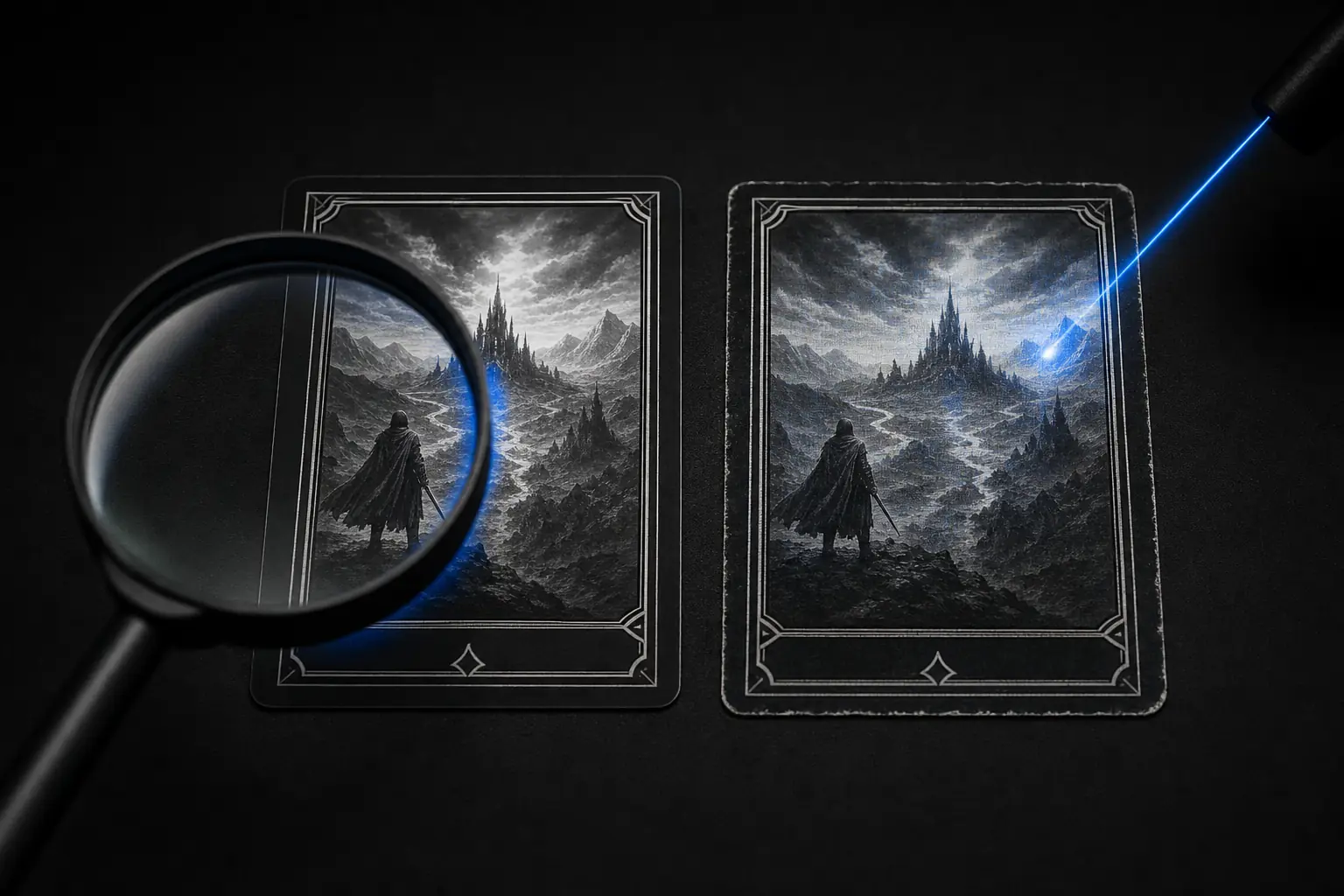
Compare against a known genuine card
Use a trusted reference from the same set when possible. Compare font shapes, border thickness, colour saturation, holo pattern and card stock. A single odd detail can come from printing variation, while several mismatches deserve caution. Use the print-pattern checker to compare corresponding close-ups.
Search the card number and set symbol. Counterfeits often combine a real image with an incorrect number, rarity mark or reverse design.
Inspect material without damaging it
Look at the card under magnification and angled light. Blurry text, coarse dots, flat foil or an unusual gloss can be warning signs. Feel for stock that is too thin, too stiff or unusually slick, but do not bend, peel or perform destructive tests on a card you may own.
Packaging and a seller's story are weak proof on their own. The Pokémon Playtest card case study shows how collectors used print evidence to question provenance. A blue-channel photo tool can make faint yellow marks easier to examine.
Slow down before a high-value deal
Ask for sharp front and back photos, including corners and the card number. Compare the offer with recent market context. A low price is not proof of a fake, but pressure to pay quickly or move off-platform should change how carefully you check.
For an expensive card, use a reputable dealer or a professional authentication route before treating it as genuine. Once you are comfortable with its identity, use the worth-grading guide to decide if it justifies the fee.
What a scan can and cannot do
daig can help identify a card and surface details worth comparing with your reference. It is useful as part of initial research when you have a clear, well-lit scan.
It cannot certify every card or guarantee authenticity. See what AI can inspect in a Pokémon card photo before relying on a scan to buy or trade.
Build an evidence folder before buying
Save the seller's photos, listing description, receipt and messages, particularly for a costly card. Ask for a new image with a requested angle or handwritten order reference if the platform allows it. A legitimate seller may decline, but a refusal gives you more context than a polished stock photo.
Compare the evidence with an established reference guide for that game and set. Avoid publishing an accusation from one suspicious photo; use neutral language until a qualified review can establish what you have.
Use an estimate as a decision aid
A close look at how can i tell if a trading card is fake? can save a submission fee, but it cannot remove uncertainty. Photos can hide a print line, a shallow dent or a surface mark that appears only when the card is tilted. Keep the card raw until you have inspected it under your own light and decided what risk you are willing to take.
daig is useful for an early estimate and a pre-screen. It does not issue an official grade, and a scan is not a guarantee of authenticity. PSA, Beckett, CGC, SGC and other graders make their own decisions after receiving the physical card.
Record the card number, set, condition notes and price context before you buy, sell or submit. That small record makes it easier to revisit the decision if the market moves or a closer inspection changes your view.
If money or a trade depends on the result, keep your reference photos and compare the card again on another day. Fresh light and a second look often reveal details that were easy to miss during a quick scan.
