
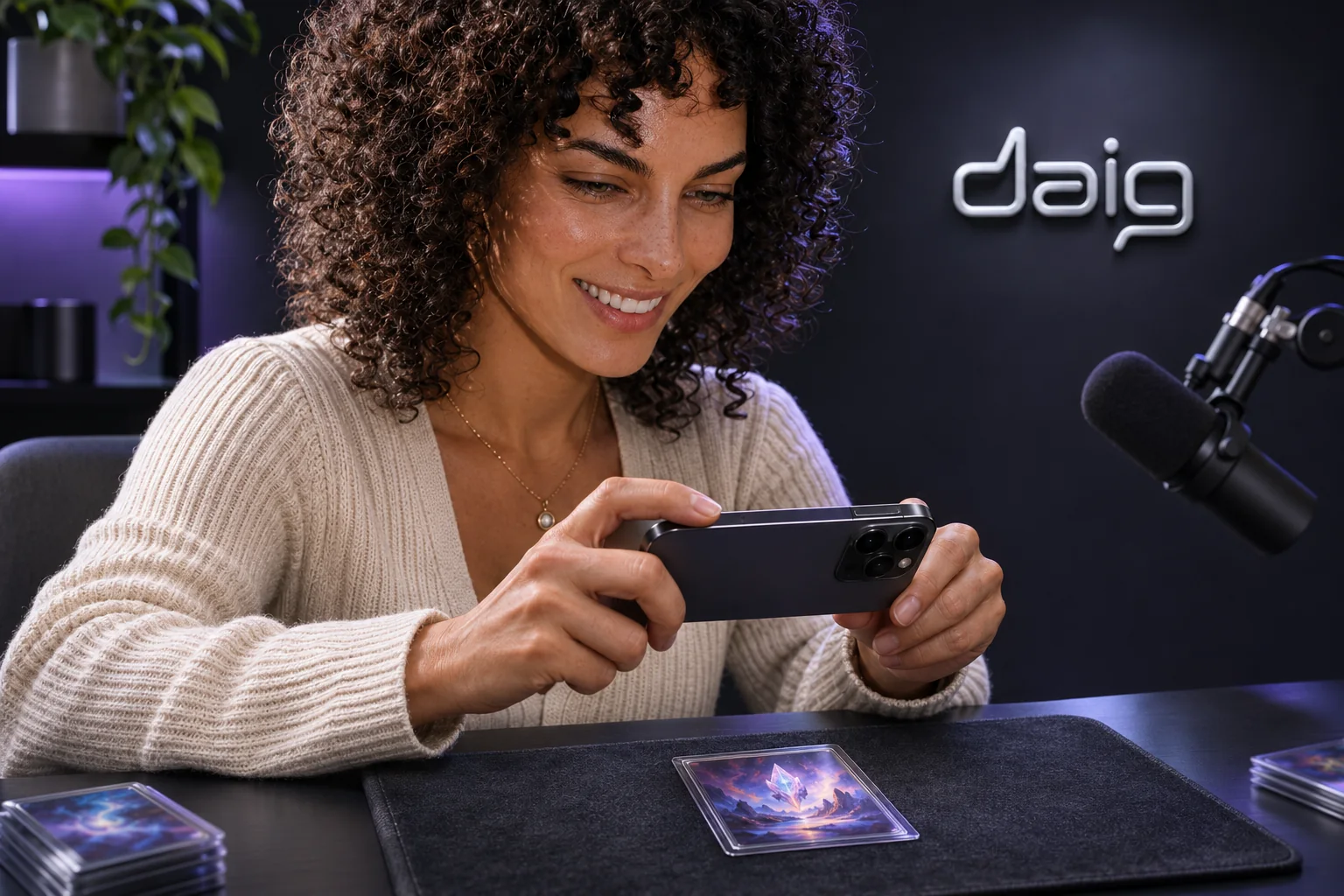
What AI can help you inspect
Use a sharp front photo to check the card number, set and language. Compare the result with the name and finish in the listing. A clear image can also reveal borders, a chipped edge or whitening that deserves a closer look. Use the centering photo guide to avoid treating camera tilt as an uneven border.
A print or foil irregularity may need more than one angle. The card authenticity checklist helps you weigh several visible clues together.
| Photo clue | Next check |
|---|---|
| Matched card identity | Verify the set number, variant, language and finish |
| Uneven borders or visible wear | Request a straight-on back photo and angled close-ups |
| Unfamiliar ink pattern or texture | Compare the same printing and examine the physical card if possible |
| Unusual slab or provenance claim | Check the cert record, photos and purchase history with an appropriate specialist |
What a straight-on scan can miss
A photo can conceal shallow dents, foil texture, an altered surface or the feel of the card stock. A counterfeit can also copy the artwork, numbers and layout that a recognition system uses to identify a card. Recognition of a printing is useful for comparison. Physical authentication is a separate step.
Use the print-pattern loupe with your own trusted reference. If you see repeated yellow marks in a scan, the Playtest card case study explains how to examine them and what further evidence matters.
A pre-buy routine for online listings
Ask for original front and back photos of the exact card you will receive. Check the set and finish, ask for angled images of any suspected defects, and compare recent sales of that printing in similar condition. Use the available buyer protection and agree the return terms before paying.
If a photo comparison leaves an expensive purchase uncertain, get an in-person inspection or an independent specialist opinion. Once you are comfortable with the card’s identity, use the digital pre-grading workflow to decide whether checking grade and resale potential is worthwhile.