
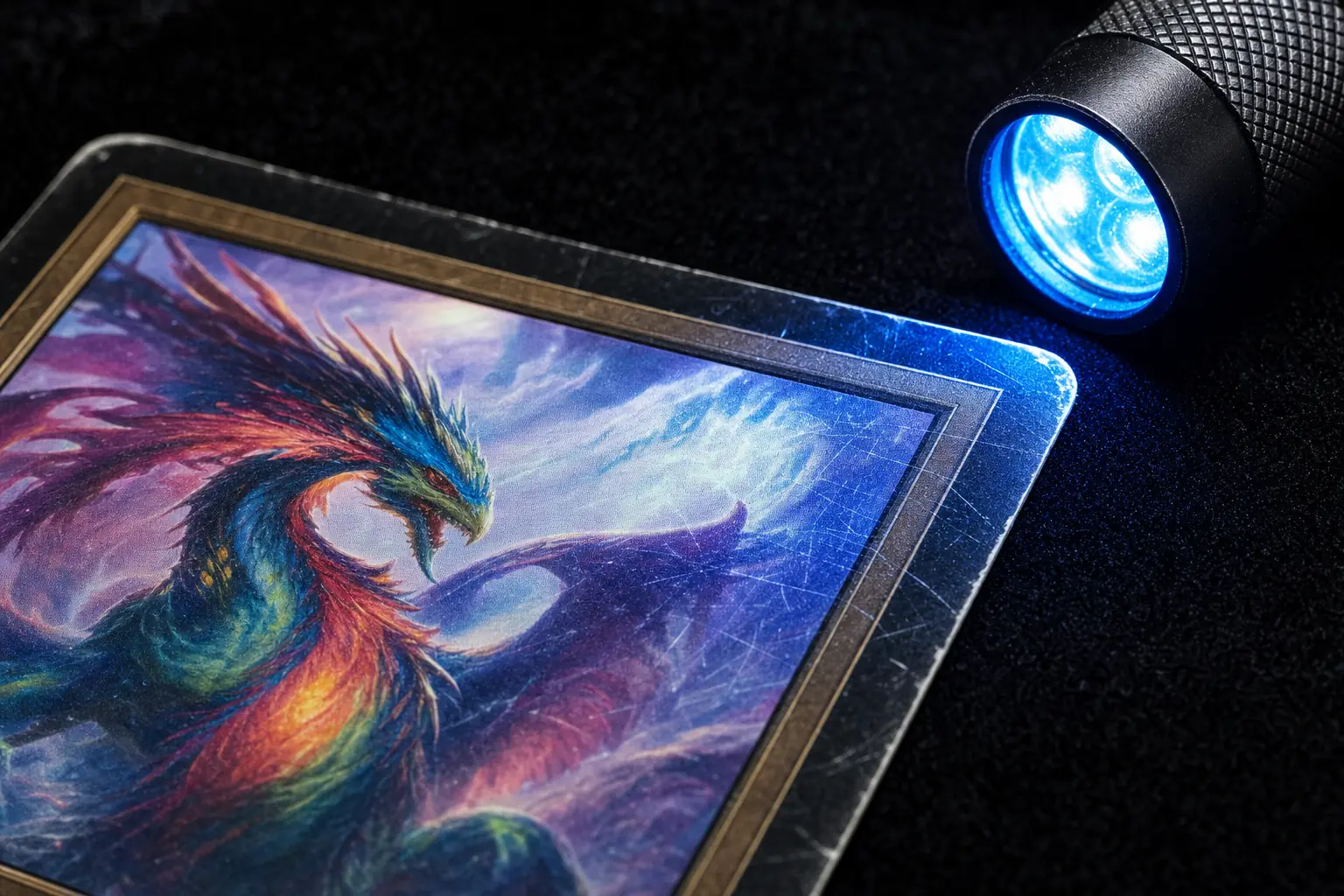
Look at the card outside the binder
A binder page can hide edge wear and make a curved card look flat. Place the card on a clean dark surface and inspect it under a bright light. Hold holographic areas at several angles so scratches and print lines become easier to see.
Do not assume a modern pull is flawless. Factory handling, print defects and pack damage can all be visible on a fresh card. Use the fresh-pull guide to protect and document it, or the card-show checklist when you are inspecting a seller’s copy.
Check corners and edges closely
Corners should be sharp and free from bends. Follow each edge with your eye for white spots, chips and lifting layers. On a dark-backed Pokémon card, a tiny white mark can be easier to see than it is on the front.
Record location and size. “Small white spot on upper-left back” gives a future buyer or your own submission notes useful detail.
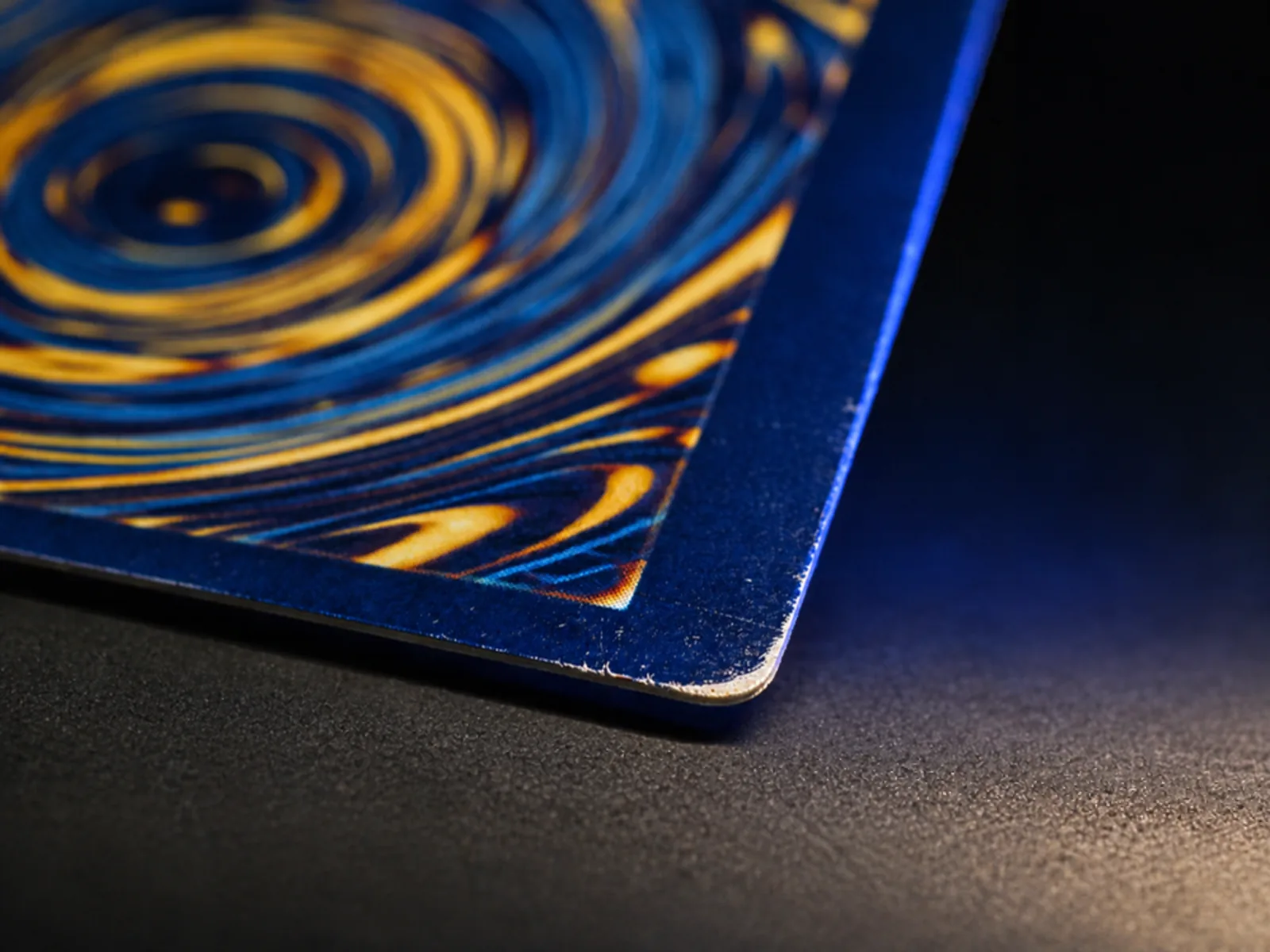
Does one white corner affect a Pokémon card's grade?
One white corner can affect the grade. Size, visibility and the condition of the rest of the card matter, so a single spot cannot tell you whether the card will get a PSA 10. Check under diffuse light, then tilt the card to see whether the spot stays in the same place. Glare from the sleeve or foil can move as you tilt.
Record the difference between a pinprick of white at the tip, a patch that reaches onto the card back, and chips along several edges. Take a close-up beside a full view of the back. If a PSA 10 is the only outcome that covers your costs, run the numbers for a lower grade before submitting.
Inspect surface and centering
Use a side angle to find scratches, dents and print lines. Then compare opposite borders on the front and back. Centering may influence a grade, but a dent or crease usually deserves more weight in a buying or grading decision.
Use the centering guide to choose repeatable reference points. Keep the card away from food, moisture and rough tables while you inspect it. Protection after the check matters as much as the check itself.
Pokémon card print line vs scratch
A print line is a mark from production. It often looks straight and uniform, or tracks the foil pattern. A scratch is physical surface damage and may start or stop irregularly, vary in width, or cross from the foil into a printed area. A straight mark can still be a scratch, so use its shape as a clue.
Compare the same area under diffuse light and a low lamp angle. Rotate the card and look again from the opposite side. If the line disappears when you remove sleeve glare, inspect the sleeve separately. When possible, compare another copy of the exact printing. If you still cannot tell, record a visible surface line and its location. Avoid testing the mark by rubbing it.
Scan, then inspect the original
daig can identify the card and offer a condition estimate from a camera scan. Use it to sort a collection or decide which cards need your time under a lamp.
The scan cannot see every defect in every lighting condition. It is a pre-screen, not an official grade or an authentication guarantee.
Handle the card safely while checking it
Use clean, dry hands and lift the card by two opposite edges. Avoid ring marks, rough playmats and kitchen tables where grit can scratch a holo surface. Return the card to a suitable sleeve after inspection instead of leaving it exposed while you research prices.
A phone flashlight held at a shallow angle can reveal a surface flaw, but do not press the card flat or flex it to improve the view. If a mark only appears in one photo, inspect it again from another angle before recording it.
Use an estimate as a decision aid
A close look at how do i check the condition of a pokémon card? can save a submission fee, but it cannot remove uncertainty. Photos can hide a print line, a shallow dent or a surface mark that appears only when the card is tilted. Keep the card raw until you have inspected it under your own light and decided what risk you are willing to take.
daig is useful for an early estimate and a pre-screen. It does not issue an official grade, and a scan is not a guarantee of authenticity. PSA, Beckett, CGC, SGC and other graders make their own decisions after receiving the physical card.
Record the card number, set, condition notes and price context before you buy, sell or submit. That small record makes it easier to revisit the decision if the market moves or a closer inspection changes your view.
If money or a trade depends on the result, keep your reference photos and compare the card again on another day. Fresh light and a second look often reveal details that were easy to miss during a quick scan.
