
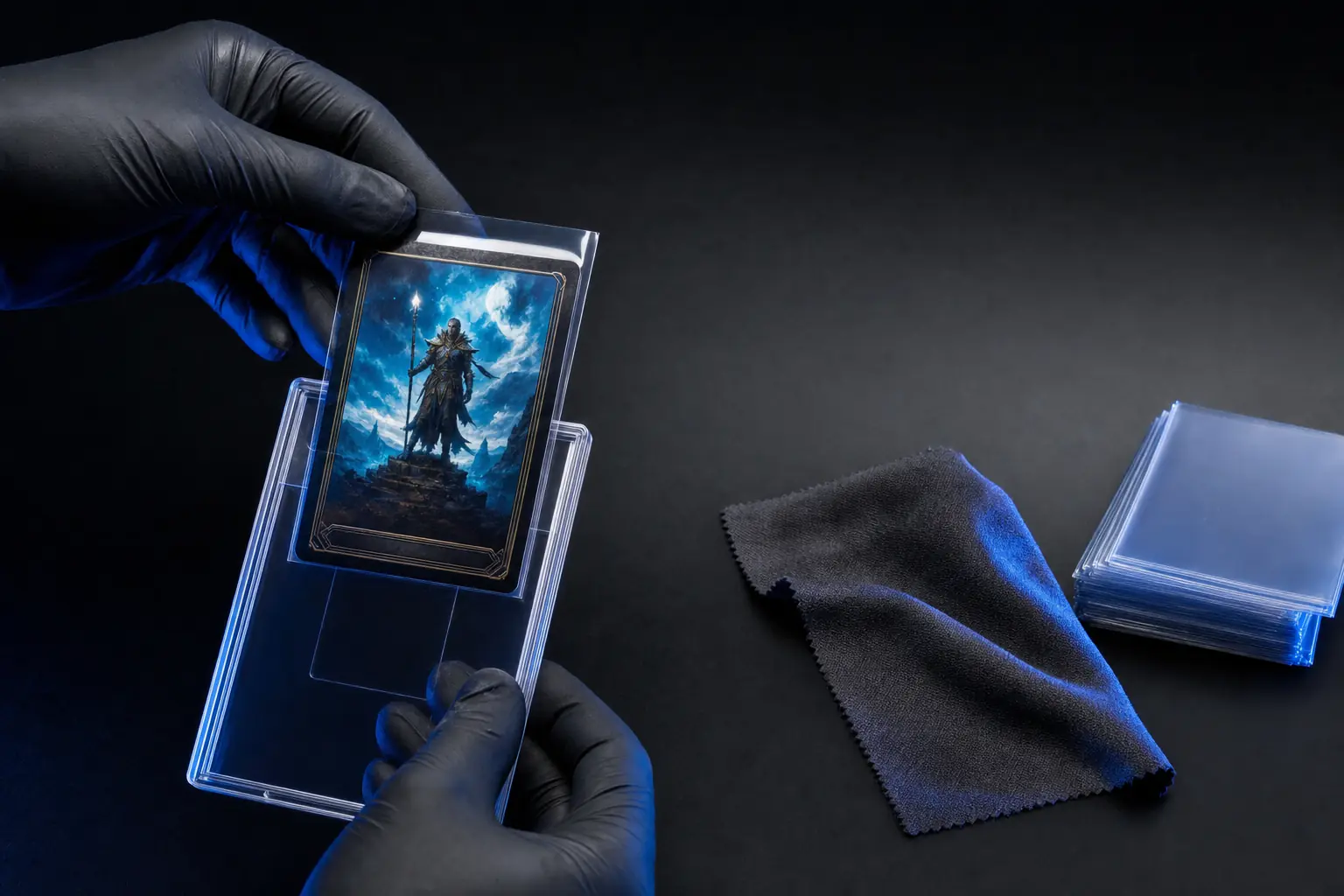
Prepare a clean inspection area
Wash and dry your hands, use a soft clean surface, and handle the card by the edges. Remove it from an opaque binder pocket so you can see both sides, but avoid wiping a card with household products. A rushed clean-up can create damage.
Use a bright lamp at an angle. Rotate the card slowly. This catches a scratch, print line or shallow indentation that disappears under direct overhead light.
Make notes by condition area
Inspect corners for fraying or bends, then follow every edge for whitening and chipping. Check the surface at several angles. Finally record centering on the front and back. A short note such as “one white spot, lower back edge” is more useful than a vague label.
Separate factory print variation from handling damage where possible, while remembering that graders still judge the physical presentation.
Set a realistic grade range
Do not build the decision around the highest possible grade. Put the card in a PSA grade range based on what you can see, then look at comparable sold cards in that range. Include the correct set, number, language and variant.
PSA examines the physical card and may see flaws that a home inspection misses. Your range is a budgeting tool, not a result. If you decide to submit, check the service, packaging and paperwork.
Pre-screen a submission stack
A daig scan can organise identification, visible condition observations and a grade estimate before you send a card. It is helpful when you are sorting several candidates from a binder or recent pull.
Review the flagged areas on the original card and choose a service level only after you understand the full cost. daig does not provide an official PSA grade or guaranteed authentication.
Photograph the condition record
Take a front and back image before you pack the card away, then a close photo of any defect you found. Use diffuse light for the overall image and a low side angle for surface marks. Label the files with the card number and date so they remain useful later.
This record helps you compare the returned card with its pre-submission condition. It cannot prove a grading outcome, but it gives you a clear basis for your own notes and insurance paperwork.
Use an estimate as a decision aid
A close look at how can i pre-grade a card before sending it to psa? can save a submission fee, but it cannot remove uncertainty. Photos can hide a print line, a shallow dent or a surface mark that appears only when the card is tilted. Keep the card raw until you have inspected it under your own light and decided what risk you are willing to take.
daig is useful for an early estimate and a pre-screen. It does not issue an official grade, and a scan is not a guarantee of authenticity. PSA, Beckett, CGC, SGC and other graders make their own decisions after receiving the physical card.
Record the card number, set, condition notes and price context before you buy, sell or submit. That small record makes it easier to revisit the decision if the market moves or a closer inspection changes your view.
If money or a trade depends on the result, keep your reference photos and compare the card again on another day. Fresh light and a second look often reveal details that were easy to miss during a quick scan.
